
What the Iran conflict means for oil, markets and portfolios
2 March 2026
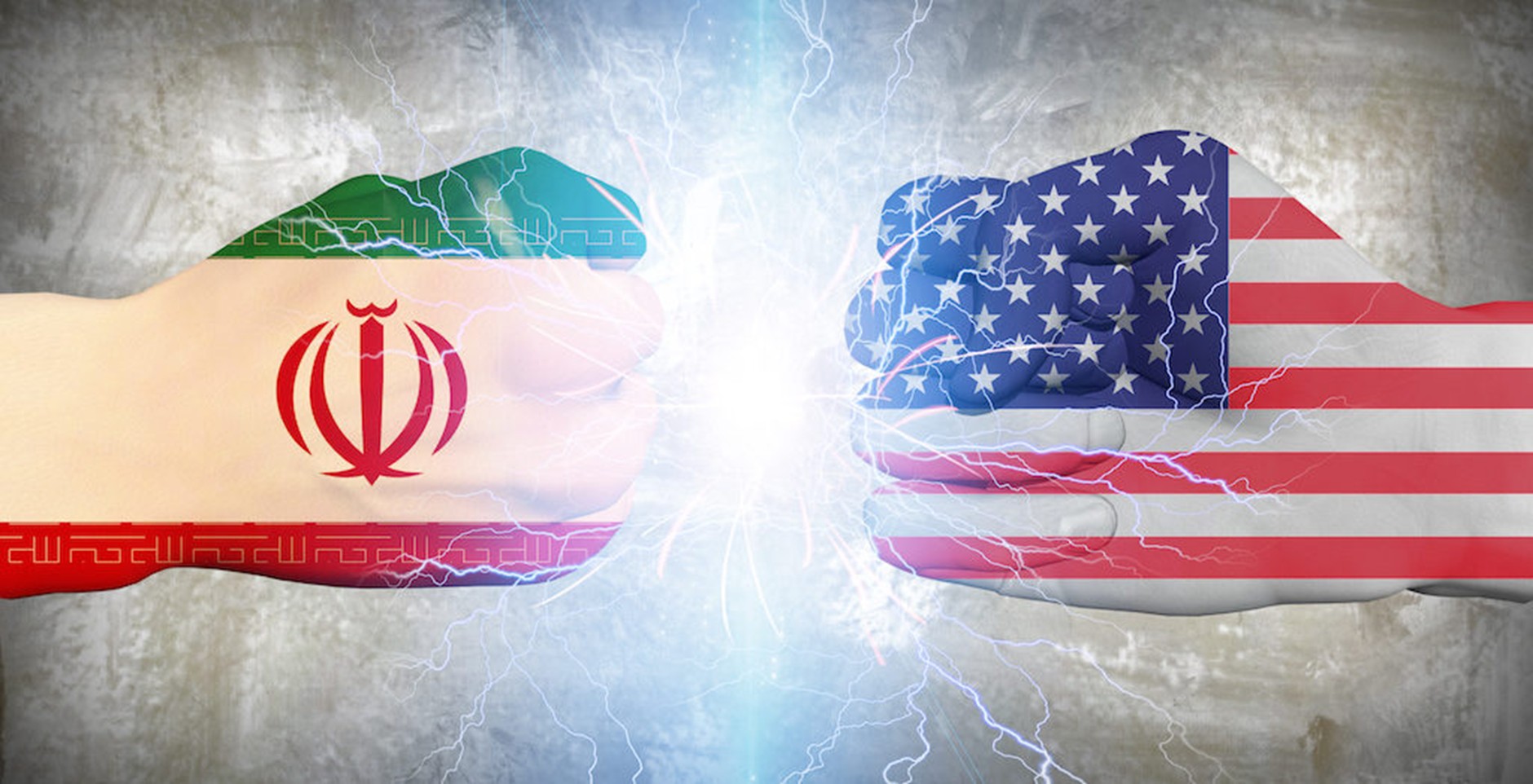
Joint US-Israeli strikes on Iran have sent oil prices surging and triggered a global flight to safety, but how should investors react?
 By Gary Jackson,
Head of editorial, FE fundinfo
Joint US-Israeli strikes that killed Iran’s supreme leader over the weekend have triggered a global flight to safety, sending oil prices sharply higher, gold to near record highs and equity markets into a broad sell-off, with analysts warning the economic consequences could rival those of Russia’s invasion of Ukraine if the conflict proves prolonged.
In the early hours of Saturday 28 February 2026, the US and Israel launched coordinated strikes on Iran, codenamed Operation Epic Fury and Operation Roaring Lion respectively, targeted Iranian leadership, military infrastructure and nuclear facilities with the stated objective of regime change.
The Israeli Air Force deployed 200 jets in its largest ever sortie, striking around 500 targets. The US carried out dozens of strikes by planes from one or more aircraft carriers based around the Middle East.
Iran’s supreme leader, Ayatollah Ali Khamenei, was killed alongside several senior officials, including army chief of staff, general Abdol Rahim Mousavi and defence minister General Aziz Nasirzadeh. Iranian media also said Khamenei’s daughter, grandchild, son-in-law and daughter-in-law were killed.
Iran retaliated swiftly, striking Tel Aviv, Haifa and US military bases across the Gulf. The Yemen-based Houthis said they will resume Red Sea attacks and there are concerns Lebanon-based proxies will activate. By 2 March, the combined strike total had reached approximately 2,000 targets, with conflict spreading to Lebanon, Cyprus and Bahrain. Three US troops have been killed.
US president Donald Trump has warned the campaign could run four to five weeks but the endpoint is seemingly defined by outcome rather than time: regime change is the objective, making the conflict’s duration unpredictable.
The central market story – oil
Following the weekend’s strikes, Brent crude opened this week at $82 a barrel, up $10 on Friday’s close.
Concerns revolve around the Strait of Hormuz rather than Iran’s own production (which is roughly 3% to 4% of global supply). Approximately 20 million barrels per day of oil and nearly a fifth of global liquefied natural gas (LNG) transit the strait daily. Tanker movement has effectively halted following Iranian strikes and attacks on at least three vessels.
Hakan Kaya, senior commodities portfolio manager at Neuberger Berman, said: “A full or near full closure lasting a month or more would require demand destruction at levels that could push crude well into triple digits and European natural gas prices toward or above the crisis levels seen in 2022.
“The relationship between disruption length and price is not proportional – it accelerates. Every additional week of closure compounds the problem because storage buffers deplete, refiner production cuts cascade and replacement cargoes from outside the region take time to mobilise.”
Adam Hetts, global head of multi-asset at Janus Henderson Investors, provided a useful oil price comparison for context: $80 is consistent with June 2025’s Twelve-Day War between Iran and Israel, $90 with the clash between the two nations in April 2024 and sustained prices above $100 with Russia’s invasion of Ukraine in 2022.
Chris Beauchamp, chief market analyst at IG, noted that “oil and gas infrastructure in the region has not yet been extensively targeted, keeping oil well south of the $100 barrel range that many expected”.
Neil Wilson, investor strategist at Saxo UK, added that while a $10 rise in oil would not materially affect inflation and growth, “$100 oil would really hit the growth outlook”.
Strategic stockpiles in the US (over 400 million barrels) and China (approximately 465 million barrels) provide some buffer, alongside OPEC spare capacity of roughly 3 to 4 million barrels per day. Kaya said: “These are finite resources and they buy time, not resolution.”
Wider market reaction
Emma Wall, chief investment strategist at Hargreaves Lansdown, said the strikes had added “uncertainty and volatility to an already choppy market”. Global equities are “now digesting the likelihood of significantly higher oil prices, supply chain concerns and the potential for subsequent higher inflation”.
Gold surged above $5,400 per ounce, extending a near 20% gain year to date, while the VIX jumped to 25 from below 20 at Friday’s close. European equities fell 2.3% but the FTSE 100 held up better at -1%, supported by its commodity and defensive weighting.
Shell and BP each gained 5%, BAE Systems 7%. IAG slumped 10% as airports in Dubai, Doha and Abu Dhabi closed.
Wall noted that a rally in the dollar reflects US military and energy independence but added: “The world’s reserve currency has waned in popularity over the past year as gold has seemed to surpass it as investors’ preferred store of wealth.”
Bond markets are expected to benefit initially from safe-haven demand. Wall cautioned, however, that a protracted conflict bringing inflation and higher military spending could reverse this dynamic, pushing yields higher and the dollar lower.
Four scenarios that could follow
Neuberger’s Kaya outlined four paths for how the conflict could proceed. The first is rapid de-escalation: Hormuz normalises within days, oil spikes then retraces. This is what current consensus favours, though Kaya noted it “requires assumptions about rational actors operating under extraordinary stress”.
The second is a prolonged standoff of four to five weeks, with oil staying elevated and volatile as Hormuz remains partially impaired. Beauchamp noted that “with Trump saying the campaign could run for four weeks, there is plenty of scope for more downside should the conflict widen to encompass oil and gas infrastructure”.
The third path is the one Kaya argued deserves more attention: regime change followed by fragmentation. Libya’s output collapsed from 1.7 million barrels per day after 2011 and never fully recovered. Iraq took six years and a full military occupation to return to pre-war levels. A power vacuum in Iran could mean a structural loss of barrels for years, not weeks.
The fourth is an extended regional war in which Hormuz becomes uninsurable for commercial shipping and demand rationing becomes necessary globally. Saxo’s Wilson added: “The longer this goes on with the Iranian regime remaining in place, the higher we go up the risk ramp.”
What investors should do

The clearest point of agreement is this: do not react. Wall’s advice was simply to do nothing.
“Heightened market volatility was a feature of 2025 and our house view was that unpredictable markets were likely to continue this year,” she said.
“In our 2026 outlook, we called out ongoing tension in the Middle East, the Russia-Ukraine war and the US mid-term elections as potential inflection points for asset prices. The events of the weekend are deeply troubling from a humanitarian point of view and present global leaders with difficult choices to make. But they are sadly not isolated incidents – global markets continue to trade through wars, pandemics and natural disasters.”
Janus Henderson’s Hetts echoed this, arguing that investors should recognise they are likely at or near peak uncertainty and that “large shifts in market dynamics would require a long-running escalation of the conflict. At this stage, this is not our base case”.
For those seeking to act constructively, Wall highlighted fixed income funds, emerging markets and quality-style equities, particularly stocks with “stable and predictable cashflows and little to no debt”.
Kaya argued that commodities are “doing exactly what they are supposed to do in moments like this”, which is acting as a source of diversification when traditional assets are buffeted by geopolitical risk.
Hetts finished: “As always, we advocate for taking a long-term view to investing rather than reacting to near- term volatility. This means maintaining well-diversified portfolios including high-quality safe-haven assets able to weather short-term uncertainty.
“It also means staying invested, rather than trying to market-time geopolitical realignment and the associated risk. Instead, we believe in maintaining exposure to the long-term secular growth trends that will continue to shape markets globally.”
Please Note:
This article is provided for information only. The views of the author and any people quoted are their own and do not constitute financial advice. The content is not intended to be a personal recommendation to buy or sell any fund or trust, or to adopt a particular investment strategy. However, the knowledge that professional analysts have analysed a fund or trust in depth before assigning them a rating can be a valuable additional filter for anyone looking to make their own decisions. Past performance is not a reliable guide to future returns. Market and exchange-rate movements may cause the value of investments to go down as well as up. Yields will fluctuate and so income from investments is variable and not guaranteed. You may not get back the amount originally invested. Tax treatment depends of your individual circumstances and may be subject to change in the future. If you are unsure about the suitability of any investment you should seek professional advice.
Please note the above article was first published by Trust Net and should not be regarded as individual investment advice on whether to buy, sell or hold any of the investments mentioned. Please speak to Ethical Offshore Investors or your personal adviser BEFORE you make any investment decision based on the information contained within this article.
Clients can access the funds / indices / equities mentioned in this article via the various Investment Platforms, and not be subject to additional entry fees or commissions, when doing so with Ethical Offshore Investments.
Lower costs resulting in more of the investment growth staying in your pocket.
Speak with Ethical Offshore Investments to learn how you can save on your investment costs.
Socially Responsible Investing – Ethical Business Standards